
Inventory financing is a solution that allows a company to finance the purchase of its goods without tying up its cash or its conventional bank borrowing capacity. As a service provider, Atlantiq handles the purchase, management and payment of your inventory with your suppliers, then sells it back to you at the pace of your business. The result: your working capital is optimised and your cash is freed up for your other strategic priorities.
For a CFO, inventory is often the hardest asset to manage: essential to the business, yet tying up cash. Inventory financing addresses precisely this tension. In this article, we explain how it works, how it differs from factoring, the criteria that determine its duration, and how Atlantiq structures this service for both commercial and non-commercial goods, by purchasing your inventory, paying your suppliers and fully managing your supplier chain.
What is inventory financing?
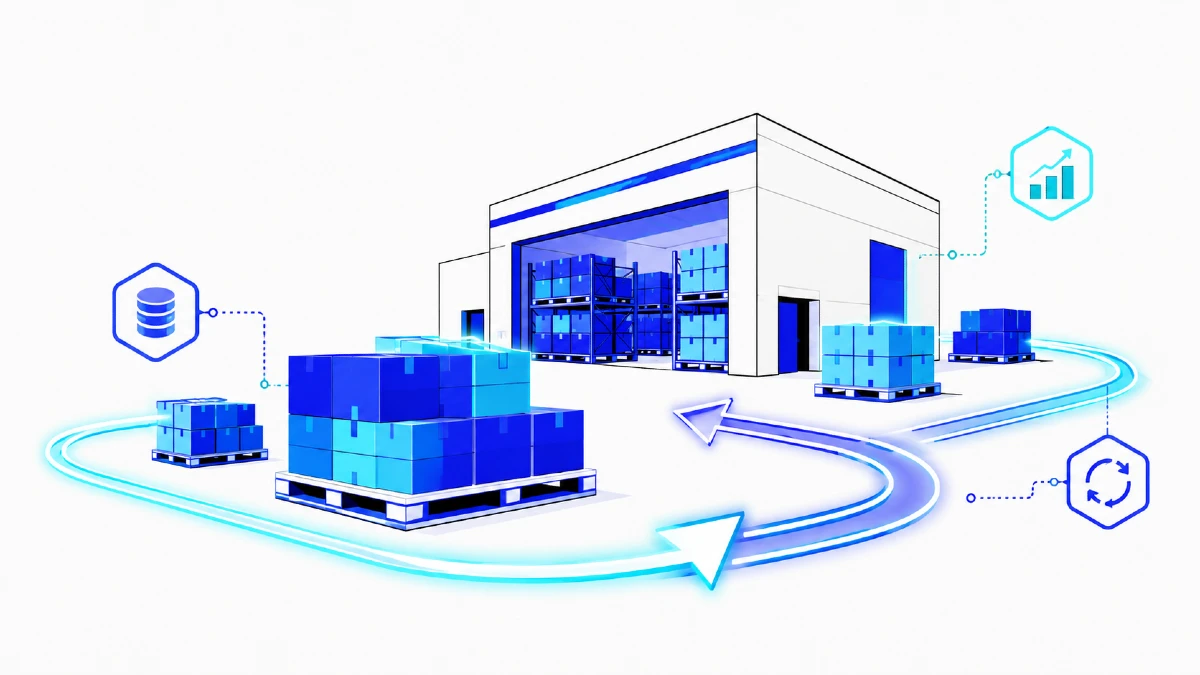
Inventory financing covers all the solutions that allow a company to outsource the financing of its procurement, rather than paying for it in cash or using a conventional bank credit line. The principle is simple: a specialist provider buys the goods from your suppliers, handles the administrative management and sells them back to you gradually, in line with your production or sales needs.
Atlantiq is not a financial institution: we are a service provider. Our added value goes beyond financing alone. We handle the purchase of inventory (including the purchase of your existing inventory to get the operation started), direct payment of your suppliers, management of their invoices and oversight of your entire supplier chain. This operational outsourcing saves you management time while optimising your working capital for the long term.
Commercial and non-commercial goods: an essential distinction
Inventory financing is not limited to finished products intended for resale (commercial goods). It also applies to non-commercial goods: raw materials, components, spare parts, industrial consumables or semi-finished goods that enter a production cycle without being sold as they are.
This distinction is decisive when setting up an inventory financing operation:
- For commercial goods, financing generally follows the standard commercial cycle: purchase, storage, resale to the end customer, which makes it easier to calculate the buy-back period.
- For non-commercial goods (raw materials, technical components), financing must be aligned with the production cycle: the pace of inventory drawdown is set by manufacturing needs rather than by customer orders.
A relevant inventory financing solution must therefore be calibrated to the exact nature of the goods financed, rather than applied uniformly. Many CFOs only discover this when putting their application together, and it is often where the quality of the chosen partner makes the difference.
How does inventory financing work?
The inventory financing mechanism can be summed up in four steps:
- Identifying the inventory to be financed and getting started: Atlantiq and your company jointly define the product references, volumes and suppliers concerned. Atlantiq can also buy your existing inventory to get the operation started.
- Handling purchases and paying suppliers: Atlantiq pays your designated suppliers directly and takes care of the administrative management of their invoices. You no longer manage the supplier payment process: we do it for you.
- Storage and operational management: the inventory remains physically available for your business, while Atlantiq provides operational oversight of your supplier chain.
- Gradual buy-back: you buy back the inventory as you use or sell it.
This mechanism allows you to optimise the management of your working capital while delegating the operational management of your supplier chain, without taking on additional bank debt.
How is your inventory valued?
Inventory valuation determines the amount financed. At Atlantiq, we apply a simple and proven method: the weighted average unit cost (WAUC), based on the purchase value of your inventory from your suppliers. This approach ensures an objective valuation, aligned with the reality of your supply chain, without the need for a specific accounting audit.
The duration of inventory financing then depends on your business model, your sector, your company’s characteristics and the type of goods involved, whether commercial or non-commercial.
Inventory financing or factoring: which should you choose?
Factoring is a solution CFOs know well for financing accounts receivable: it involves selling your trade receivables to a factor in exchange for immediate funding. Inventory financing addresses a different but complementary need.
| Criterion | Factoring | Inventory financing |
|---|---|---|
| Asset financed | Trade receivables | Inventory of goods or raw materials |
| When it applies | After the sale, when the invoice is issued | Before the sale, as soon as the goods are purchased |
| Impact on working capital | Reduces DSO | Optimises cash tied up at the start of the cycle |
| Scope of service | Financing only | Financing + purchasing, payment and supplier management |
For a company looking for an alternative or a complement to factoring, inventory financing acts on the upstream end of the operating cycle, whereas factoring acts on the downstream end. Combined, the two solutions cover the entire purchase-production-sale cycle and free up cash consistently across all of your working capital. This is the approach we describe in our article on working capital optimisation and cash flow improvement.
Why finance your inventory with a specialist rather than your bank?
Many companies wonder how to finance their inventory and naturally turn to their bank. Bank inventory financing does exist, but it has structural limitations:
- It uses up a credit line or borrowing capacity that is already called upon for other needs (investment, day-to-day cash).
- It is often less responsive to one-off needs such as opportunity buying, seasonal peaks or the launch of a new product range.
Atlantiq’s inventory financing, by contrast, can be put in place quickly and is sized precisely to the inventory concerned. Unlike a bank loan, it is also a full service: Atlantiq handles purchasing, supplier payments, supplier invoice management and oversight of your supplier chain. It forms part of an operational and financial approach to working capital optimisation, complementing rather than replacing your existing bank facilities.
Inventory financing with Atlantiq
Atlantiq supports B2B companies in structuring their inventory financing, for both commercial and non-commercial goods. Our approach stands out for:
- A full service: purchase of your inventory (including the purchase of existing inventory to get started), direct payment of your suppliers, supplier invoice management and end-to-end oversight of your supplier chain.
- A simple, proven valuation method: weighted average cost (WAC), based on the purchase value from your suppliers, with no specific accounting audit required.
- Possible integration with our other outsourcing solutions, in particular the outsourcing of your customer chain (Order to Cash), for consistent optimisation across your entire operating cycle.
Whether you want to finance an opportunity purchase, secure a scale-up in volumes, organise the financing of your recurring purchases from suppliers, or free up cash tied up in your inventory for the long term, our team will work with you to find the structure best suited to your business.
Inventory financing FAQ
Would you like to optimise your working capital and improve your cash flow for the long term?
Optimise your working capital and improve your cash flow
With our Atlantiq experts


